
1. Word Meaning
The Sanskrit term “Supta” means “reclined” or “supine”, and “Virasana” means “Hero Pose”, where “Vira” translates to hero, brave, or warrior, and “asana” means posture.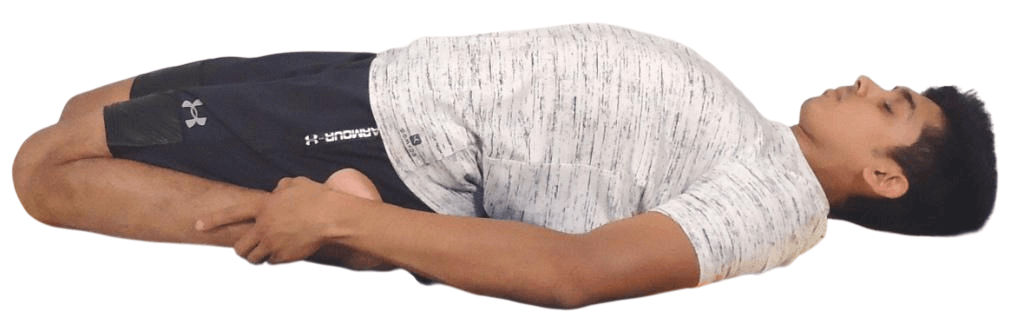
Therefore, Supta Virasana literally translates to “Reclined Hero Pose”. It is a restorative and deep hip-opening posture performed on the back, providing a gentle yet intense stretch for the quadriceps, hip flexors, and spine, while opening the chest and shoulders. Symbolically, the pose cultivates patience, surrender, and inner strength, allowing the practitioner to reflect upon their inner courage while experiencing deep physical opening.
2. Definition
Supta Virasana is a supine yoga posture in which the practitioner:
- Sits on the floor with legs folded back in Virasana (Hero Pose)
- Reclines gradually onto the back, resting on the ground or on props such as blankets or bolsters
- Opens the hips, stretches quadriceps, and allows the spine to extend
It is considered an intermediate to advanced posture, requiring flexibility in:
- Quadriceps
- Hip flexors (iliopsoas)
- Knee joints
- Thoracic and lumbar spine
Supta Virasana is widely used in restorative, yin, and Hatha yoga for its ability to stretch anterior musculature, improve spinal extension, and enhance breathing capacity.
3. Method of Practice – Step by Step
Step 1: Begin in Virasana (Hero Pose)
- Knees together, feet slightly wider than hips
- Sit between heels with hips grounded evenly
- Spine upright, shoulders relaxed
Step 2: Engage Core and Lengthen Spine
- Engage lower abdominals to support lumbar spine
- Inhale, lengthen through the thoracic spine
- Relax shoulders and neck
Step 3: Prepare the Legs
- Ensure knees, ankles, and feet are comfortable
- Use a folded blanket under hips if hips cannot comfortably reach floor
Step 4: Recline Gradually
- Place hands behind hips for support
- Slowly lean backward, first onto elbows (Ardha Supta Virasana)
- Gradually lower torso to the ground, supporting head and spine with a bolster or folded blankets if necessary
Step 5: Align the Spine
- Spine should maintain gentle natural curves
- Avoid over-compression in lumbar spine
- Shoulders relax, chest opens
- Neck rests gently on floor or bolster
Step 6: Position Arms
- Arms can rest along the sides, overhead, or in a comfortable position to enhance chest opening
Step 7: Maintain Breath
- Inhale to expand chest and rib cage
- Exhale to allow spine and hips to relax into the floor
- Hold for 30 seconds to 3 minutes, gradually increasing duration with practice
Step 8: Exit Pose Safely
- Press forearms into floor
- Engage core to lift torso onto elbows first
- Return to seated Virasana
- Stretch legs forward to release knees and ankles
4. Alignment Cues
Hips
- Sit evenly between heels
- Hips should not tilt backward or forward
Knees and Ankles
- Knees aligned with hips
- Ankles relaxed and not compressed
Spine
- Lengthen through thoracic and lumbar spine
- Avoid excessive lumbar lordosis
Chest and Shoulders
- Shoulder blades move downward and slightly back
- Chest opens without forcing backbend
Neck
- Maintain neutral alignment
- Avoid hyperextension
Props
- Use folded blankets or bolsters under hips, back, or head to ensure comfort and safe alignment
5. Benefits of Supta Virasana
Physical Benefits
- Stretches Quadriceps and Hip Flexors – lengthens rectus femoris, iliopsoas, and sartorius
- Opens Knees and Ankles – increases mobility in lower limbs
- Improves Spinal Extension – promotes thoracic flexibility
- Opens Chest and Shoulders – enhances lung capacity and respiration
- Strengthens Core Stabilizers – supports safe spinal extension
- Enhances Circulation in Lower Extremities – beneficial for sedentary practitioners
- Restorative Effect – calms nervous system
Energetic Benefits
- Opens Anahata (Heart) chakra
- Stimulates Supta Virasana’s front body stretch, enhancing energy flow
Psychological Benefits
- Reduces tension and stress
- Encourages patience and mindfulness
- Enhances mental clarity and emotional openness
6. Contraindications
- Knee injuries or surgeries – avoid deep knee flexion
- Ankle injuries – avoid prolonged pressure
- Lower back pain or herniated discs – modify with props
- Pregnancy (especially 2nd and 3rd trimester) – avoid deep recline
- Sciatica or hip replacement – consult medical professional before attempting
7. Counterposes
After Supta Virasana, the anterior stretch requires neutralization:
- Balasana (Child’s Pose) – gently flexes spine
- Paschimottanasana (Seated Forward Bend) – balances anterior stretch
- Setu Bandhasana (Bridge Pose) – strengthens posterior chain
- Savasana (Corpse Pose) – complete relaxation
8. Preparatory Practices
For Hips and Quadriceps
- Virasana (Hero Pose)
- Anjaneyasana (Low Lunge)
- Baddha Konasana (Bound Angle Pose)
For Spine
- Bhujangasana (Cobra Pose)
- Salabhasana (Locust Pose)
- Ardha Chakrasana (Half Wheel)
For Shoulders
- Gomukhasana arms
- Shoulder rolls
- Extended puppy pose
For Core Engagement
- Navasana (Boat Pose)
- Side plank variations
9. Modifications
- Blanket Under Hips
- Elevates hips for easier recline
- Reduces strain on knees and lower back
- Bolster Support
- Place bolster along spine or under torso
- Head supported to prevent neck compression
- Ardha Supta Virasana (Half Recline)
- Recline only halfway onto elbows
- Easier for beginners
- Legs Modification
- If knees or ankles are tight, place cushions between calves and thighs
- Reduces pressure on joints
- Chair-Assisted Supta Virasana
- Sit on edge of chair, recline slowly onto chair-back for upper body support
10. Muscles Involved
A. Stretched Muscles
- Quadriceps (rectus femoris, vastus group)
- Iliopsoas (hip flexors)
- Sartorius
- Pectoralis major and minor (if arms overhead)
- Intercostals (rib cage muscles)
- Abdominals (rectus abdominis, obliques)
- Anterior tibialis
B. Strengthened / Stabilized Muscles
- Erector spinae
- Obliques
- Transverse abdominis
- Gluteus medius and maximus
- Rhomboids and trapezius
11. Kinesiology
- Primary Motions:
- Hip flexion (knees)
- Lumbar and thoracic extension
- Shoulder flexion and slight abduction (if arms overhead)
- Joint Actions:
- Knee: flexion, ankle plantarflexion
- Hip: extension of rectus femoris eccentrically
- Spine: extension
- Shoulder: flexion/abduction
- Movement Type:
- Eccentric stretch for hip flexors and quadriceps
- Isometric stabilization for spine and shoulders
12. Kinematics
- Plane of Movement: Sagittal
- Axis: Transverse axis (for spinal extension)
- Joint Mobility:
- Thoracic and lumbar spine lateral support
- Knee flexion with tibial rotation allowed naturally
- Shoulder flexion with scapular upward rotation
- Force Distribution:
- Evenly between hips, knees, and spine
- Props reduce compressive load
13. Biomechanics
- Load on Knee Joints:
- Controlled by proper alignment and use of props
- Spinal Compression:
- Avoided with gradual recline and bolsters
- Hip Flexor Lengthening:
- Controlled eccentric action prevents injury
- Chest Expansion:
- Facilitates thoracic spine mobility and improved respiration
14. Functional Anatomy & Physiology
A. Musculoskeletal
- Increases flexibility of quadriceps, hip flexors, and spine
- Strengthens core stabilizers
- Opens thoracic cage
B. Respiratory System
- Expands rib cage
- Enhances diaphragmatic breathing
- Improves lung capacity
C. Nervous System
- Activates parasympathetic response
- Reduces sympathetic overactivity
- Enhances proprioception
D. Circulatory System
- Mild venous return stimulation from leg positioning
- Increases blood flow to anterior body
15. Teaching Methodology
Common Misalignments
- Collapsing lower back
- Hyperextension of cervical spine
- Knees collapsing inward
- Excessive pressure on ankles
Corrections
- Suggest blanket under hips
- Use bolster under spine or torso
- Guide elbows for Ardha Supta Virasana before full recline
- Encourage slow, mindful entry and exit
Hands-on Adjustments
- Lightly support torso during recline
- Guide knees and ankles for proper alignment
- Support head or neck with blanket if necessary
Cueing Tips
- “Lengthen spine before reclining”
- “Engage core to protect lumbar spine”
- “Breathe into your chest and ribcage”
- “Use props to support hips and knees”
Advanced Teaching Notes
- Gradually increase hold time
- Encourage self-awareness of joint comfort
- Combine with forward bends and twists for spinal balance
16. Variations
- Ardha Supta Virasana (Half Reclined Hero)
- Props under torso for restorative practice
- Arm variations: arms overhead, along sides, or hands on chest
- Chair-assisted or wall-supported Supta Virasana
17. Philosophical Aspect
- The hero pose symbolizes inner courage and patience
- The reclined version encourages surrender and self-awareness
- Balances strength and flexibility, both physically and mentally
- Encourages mindfulness and deep introspection
18. Conclusion
Supta Virasana is an advanced, restorative posture that:
- Opens quadriceps, hip flexors, chest, and spine
- Enhances thoracic mobility and respiration
- Promotes flexibility, strength, and core stabilization
- Reduces stress and cultivates mindfulness
With proper preparation, modifications, and guidance, Supta Virasana is accessible to most students and offers deep therapeutic benefits for physical, mental, and energetic well-being.
This essay provides a full technical, anatomical, and teaching-level guide suitable for TTC students, yoga instructors, and advanced practitioners.
QUESTION AND ANSWER
1. What does “Supta” mean in Sanskrit?
a) Sitting
b) Reclined or supine
c) Standing
d) Twisted
Answer: b
2. “Virasana” translates to:
a) Reclined pose
b) Warrior or hero pose
c) Lotus pose
d) Triangle pose
Answer: b
3. Supta Virasana is primarily a:
a) Forward bend
b) Supine backbend / reclined hip opener
c) Lateral bend
d) Balancing pose
Answer: b
4. Which muscles are primarily stretched in Supta Virasana?
a) Hamstrings
b) Quadriceps and hip flexors
c) Gluteus maximus
d) Gastrocnemius
Answer: b
5. Which muscles are engaged for spinal support in this pose?
a) Erector spinae and obliques
b) Soleus and tibialis anterior
c) Biceps brachii
d) Deltoids
Answer: a
6. Supta Virasana requires flexibility in:
a) Knee joints
b) Hip flexors
c) Quadriceps
d) All of the above
Answer: d
7. The main joint action at the knees is:
a) Flexion
b) Extension
c) Rotation
d) Abduction
Answer: a
8. The main joint action at the hips is:
a) Flexion
b) Extension
c) Abduction
d) Medial rotation
Answer: b
9. Which part of the spine is primarily extended?
a) Cervical only
b) Thoracic and lumbar
c) Sacral only
d) Coccyx
Answer: b
10. The pose is contraindicated for:
a) Healthy knees
b) Knee injuries
c) Shoulder flexibility issues
d) Mild lower back tightness
Answer: b
11. Which preparatory pose helps open the hips for Supta Virasana?
a) Balasana (Child’s Pose)
b) Virasana (Hero Pose)
c) Tadasana (Mountain Pose)
d) Shavasana
Answer: b
12. Which preparatory pose stretches the hip flexors?
a) Anjaneyasana (Low Lunge)
b) Marjaryasana (Cat Pose)
c) Dandasana (Staff Pose)
d) Setu Bandhasana
Answer: a
13. Common misalignment in Supta Virasana is:
a) Spinal collapse in lumbar region
b) Overstretching arms
c) Feet pointing forward
d) Lifting sternum
Answer: a
14. How should the neck be aligned?
a) Hyperextended
b) Neutral, supported with props if necessary
c) Twisted
d) Compressed
Answer: b
15. Ardha Supta Virasana refers to:
a) Full recline
b) Half recline onto elbows
c) Standing variation
d) Lateral side stretch
Answer: b
16. Props commonly used include:
a) Blanket under hips
b) Bolster under back or head
c) Cushion under knees
d) All of the above
Answer: d
17. Chest opening is enhanced by:
a) Raising arms overhead
b) Keeping arms alongside body
c) Rotating hips forward
d) Contracting abdominals
Answer: a
18. Main benefit of Supta Virasana is:
a) Strengthens anterior body
b) Stretches quadriceps, hip flexors, and spine
c) Improves lateral bending
d) Enhances balance on one leg
Answer: b
19. Energetically, Supta Virasana opens:
a) Root chakra (Muladhara)
b) Heart chakra (Anahata)
c) Third eye (Ajna)
d) Sacral chakra (Svadhisthana)
Answer: b
20. How long should beginners hold Supta Virasana?
a) 5–10 seconds
b) 30 seconds to 1 minute
c) 10 minutes
d) 15 minutes
Answer: b
21. Which breathing pattern is recommended?
a) Shallow chest breathing
b) Deep diaphragmatic and thoracic breathing
c) Rapid short breaths
d) Breath-holding
Answer: b
22. Which counterpose balances Supta Virasana?
a) Balasana (Child’s Pose)
b) Ardha Matsyendrasana
c) Tadasana
d) Trikonasana
Answer: a
23. Which preparatory spinal pose helps with back extension?
a) Bhujangasana (Cobra Pose)
b) Sukhasana (Easy Pose)
c) Adho Mukha Svanasana
d) Paschimottanasana
Answer: a
24. Knee support can be enhanced by:
a) Folding blankets under hips
b) Using a chair
c) Placing cushion between calves and thighs
d) All of the above
Answer: d
25. Exit from Supta Virasana should be:
a) Fast, jumping to standing
b) Slow, pressing onto elbows and engaging core
c) Twisting torso abruptly
d) Rolling onto side without support
Answer: b
26. Which core muscles are active for stabilization?
a) Rectus abdominis and obliques
b) Erector spinae
c) Transverse abdominis
d) All of the above
Answer: d
27. Shoulder alignment cue is:
a) Shrug toward ears
b) Relax, shoulder blades down and back
c) Press onto floor with force
d) Rotate forward
Answer: b
28. How can beginners reduce lumbar compression?
a) Use props under back or head
b) Avoid recline entirely
c) Hyperextend spine
d) Fold arms behind back
Answer: a
29. Which action is avoided in Supta Virasana?
a) Gradual spinal recline
b) Overstretching knees or lumbar region
c) Controlled breathing
d) Gentle chest expansion
Answer: b
30. Which preparatory pose stretches quadriceps safely?
a) Virasana (Hero Pose)
b) Adho Mukha Svanasana
c) Shavasana
d) Trikonasana
Answer: a
31. Benefits for respiration include:
a) Compresses lungs
b) Expands rib cage
c) Reduces lung capacity
d) No effect
Answer: b
32. Supta Virasana can improve:
a) Spinal extension and flexibility
b) Knee and ankle mobility
c) Postural awareness
d) All of the above
Answer: d
33. Which muscle supports hip stabilization?
a) Gluteus medius
b) Quadratus lumborum
c) Latissimus dorsi
d) Soleus
Answer: a
34. Hands-on teaching adjustment can include:
a) Guiding torso onto props
b) Forcing deeper backbend
c) Pulling legs apart
d) Compressing neck
Answer: a
35. Benefits for the nervous system include:
a) Parasympathetic activation
b) Increased sympathetic activity
c) Hyper-alertness
d) None
Answer: a
36. Arms can be positioned:
a) Along sides
b) Overhead
c) On chest
d) Any of the above depending on comfort and purpose
Answer: d
37. Precaution for ankle injuries:
a) Avoid Supta Virasana or use props
b) Force feet flat
c) Ignore discomfort
d) None
Answer: a
38. Supta Virasana is classified as:
a) Backbend / anterior stretch
b) Forward bend
c) Lateral bend
d) Arm balance
Answer: a
39. Which muscle group is stretched if arms are overhead?
a) Pectoralis major and minor
b) Triceps
c) Latissimus dorsi only
d) Quadriceps
Answer: a
40. Which preparatory arm exercise is beneficial?
a) Gomukhasana arms
b) Shoulder rolls
c) Extended puppy pose
d) All of the above
Answer: d
41. Props help:
a) Make pose accessible for beginners
b) Reduce joint compression
c) Support gradual progression
d) All of the above
Answer: d
42. Common psychological benefit:
a) Stress reduction
b) Increased anxiety
c) Hyperactivity
d) Fatigue
Answer: a
43. Advanced variation includes:
a) Full recline onto floor with arms overhead
b) Half recline on elbows
c) Bolster-supported restorative version
d) All of the above
Answer: d
44. Spinal alignment cue is:
a) Flatten lumbar spine forcefully
b) Maintain natural curves
c) Overarch cervical region
d) Twist thoracic spine
Answer: b
45. Which sequence complements Supta Virasana?
a) Forward bends, spinal twists, and restorative poses
b) Jumping poses only
c) Arm balances
d) None
Answer: a
46. Supta Virasana is suitable for which style of yoga?
a) Restorative
b) Yin
c) Hatha
d) All of the above
Answer: d
47. Recommended exit cue for students:
a) “Roll fast onto stomach”
b) “Press forearms, engage core, rise slowly”
c) “Jump to standing”
d) “Pull legs apart abruptly”
Answer: b
48. Using a bolster under spine:
a) Reduces lumbar compression
b) Enhances relaxation
c) Increases accessibility for beginners
d) All of the above
Answer: d
49. Which energy principle is encouraged by Supta Virasana?
a) Patience and surrender
b) Aggressiveness
c) Hyperactivity
d) Restlessness
Answer: a
50. Safe duration for advanced practitioners:
a) 30 seconds
b) 1–5 minutes
c) 10 minutes
d) 30 minutes
Answer: b