
Disorders of blood vessels

Disorders of blood vessels: Arteriosclerosis: Arteriosclerosis is the thickening, hardening, and loss of elasticity of the walls of arteries. This process gradually restricts the blood flow to one’s organs and tissues. Atherosclerosis: it’s a thickening of arterial walls due to the deposition of fat and white blood cells). An aneurysm: it’s a local abnormal dilation of an artery. Classified into 3 types: fusiform, saccular, and dissecting. Embolus: it’s a clot moving in circulation and becomes impacted in a small vessel. Thrombus: it’s a clot obstructing a blood vessel at the point where it’s actually formed. Venous thrombosis: its blood clot obstructing a vein. Thrombophlebitis: it’s inflammation of vein complicated by an obstructing clot. Varicose vein: it’s a dilated and tortuous superficial vein. This occurs because valves in the veins don’t close. So, the backward flow of blood in the vein is not prevented. This leads to dropping back of the column occurs in 1- long saphenous vein. 2- short saphenous vein. 3- anterior tibial vein.
Properties of skeletal muscle
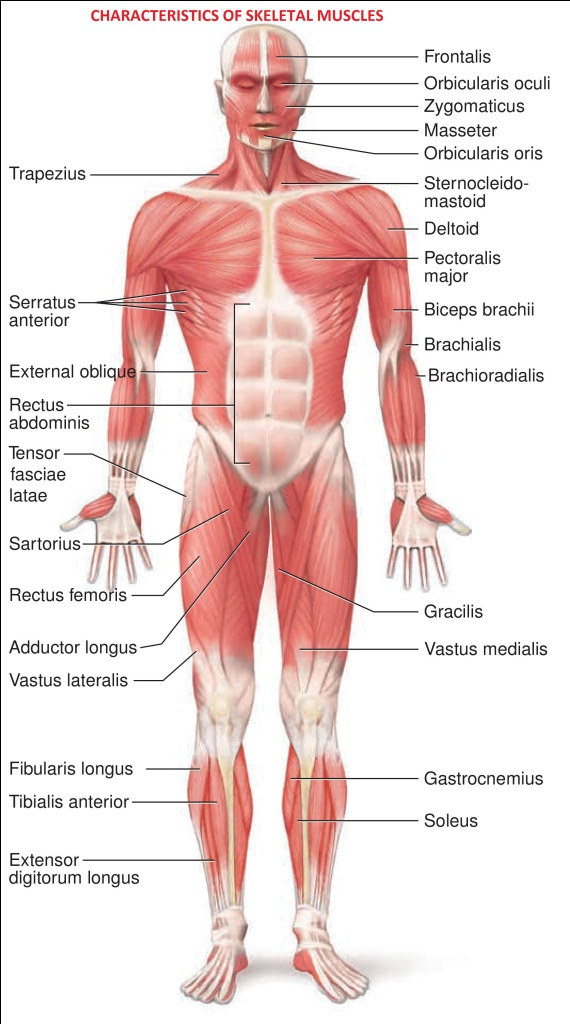
Properties of skeletal muscle: Excitability and irritability: It’s the property of a muscle to respond to a stimulus. If the response occurs in the front of a contraction. It’s called as contractility. Tonicity: Muscles of a living organism are in the partially contracted state, even at rest. They are never fully relaxed and they will resist being stretched the resistance to stretch is called as tonicity. All or none response: When a stimulus is given to a muscle, the muscle either contracts to the maximum or it doesn’t contract at all. When a weak stimulus is applied to a muscle, it doesn’t produce any response. But when the stimulus is gradually increased, the muscle contracts at a point to the maximum level. Later even a greater degree of stimulus does not increase the degree of contraction. Summation: When a second stimulus is given to a muscle even while it’s contracting due to the first stimulus, the degree of contraction is more. This phenomenon is called as a summation. The increased response is due to stimulation of more and more motor units by repetitive stimuli. Treppe or staircase phenomenon: Stimulation of a muscle at regular short intervals increases the amplitudes of contraction *which goes on increasing like the steps of a staircase*. This occurs due to increased irritability of the muscle produced by chemical products of the earlier contractions. Tetanus: When a muscle is stimulated repeatedly at a very faster rate, the muscle contracts maximally. The muscle remains at this maximal state of contraction till 1- the stimulus continues or 2- it gets fatigued. This sustained maximal contraction is called tetanus. Refractory period: Muscle, like other excitable tissues, has a period following its action potential during which the membrane will not respond to stimulation regardless of the strength. Isotonic contraction: It’s the contraction in which the muscle shortens under constant load. It occurs in muscles during walking, running or lifting. Isometric contraction: In this type of contraction, the muscle develops tension but it does not shorten in length e.g. maintaining the posture against gravity. Fatigue: It’s a state of reduced excitability and contractility of a muscle. It’s produced by rapid and repeated stimulation of the muscle. Fatigue may occur due to depletion of energy and accumulation of metabolites like lactic acid.
Joint Disorders
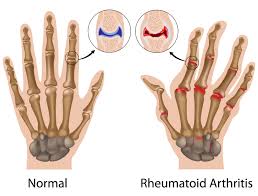
Joint Disorders Arthritis – inflammation of a joint. Characterized by pain, stiffness, and swelling. Over time, the joint can become severely damaged. Osteoarthritis is the most common type of arthritis. It’s often related to aging or to an injury. Rheumatoid arthritis is the most common form of this kind of Autoimmune arthritis. Rheumatoid arthritis happens when your body’s immune system attacks healthy cells in your body by mistake. Bursitis – inflammation of a fluid-filled sac that cushions the joint, Excessive use of a joint or stress on a bursa may cause bursitis, an inflammation of a bursa. Joint Dislocation: Luxation or Dislocation, displaces the articulating bones of a joint and usually results from a fall or other unusual body movement. Joint dislocation produces an obvious deformity of the joint, some loss of ability to move the articulated bones, localized pain, and swelling. Sprains: Sprains result from overstretching or tearing the connective tissues, ligaments, and tendons associated with a joint, but they do not dislocate the articular bones.
Cardiac Cycle
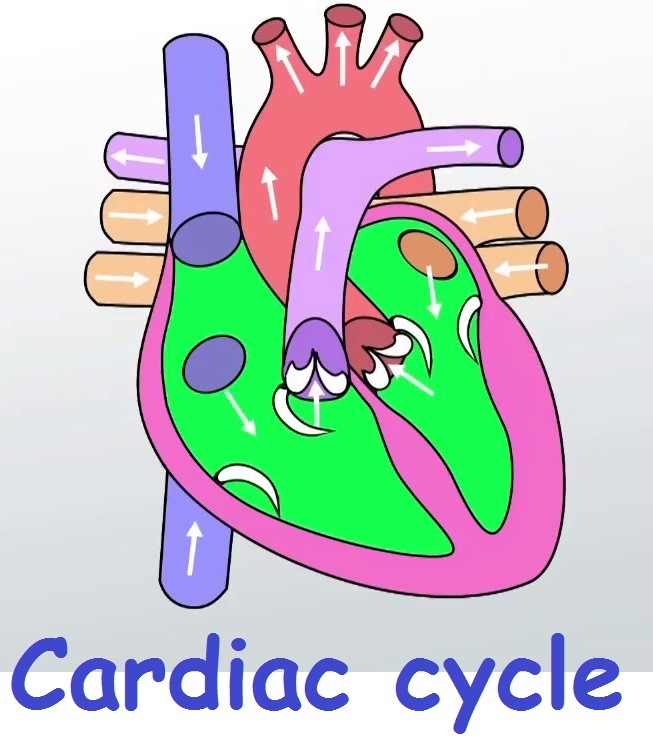
The Cardiac cycle: the function of the heart is to maintain a constant circulation of blood throughout the body. It acts as a pump to maintains a constant circulation of blood throughout the body. It’s achieved as follows: The functions of the cardiovascular system are to provide the tissues of the body with oxygen and nutrients which are transported in the blood. The superior and inferior vena cava veins bring venous blood from various body parts to the heart. This venous blood fills the right atrium. When it’s full, the right atrium contracts sending blood to the right ventricle. Now the right ventricle contracts this sends blood to the lungs through pulmonary trunk which divides into right and left pulmonary arteries. The blood gets oxygenated in the lungs and then the oxygenated blood is carried by a pulmonary vein to the left atrium. Now the left atrium contracts and sends blood to the left ventricle. The left ventricle contracts and send blood into the aorta, this blood circulated throughout the body. This is achieved by rhythmic contraction of its muscle. The cardiac cycle is the sequence of events which occur in the heart during a single beat. Heart rate is between 60 to 90 normally. With an average rate of 72. So the time taken for one beat is 0.8 second. So the sequence of events occurs every 0.8 seconds. The cardiac cycle occurs in 2 phases: Systole which means a period of contraction. Diastole which means a period of relaxation. The cycle of events occurs as follows: To start with blood from the veins fill the 2 atria, the superior and inferior vena cava fill the right atrium, the pulmonary veins fill the left atrium. This is followed by a wave of contraction in the atria, this leads to emptying of atrial blood into the respective ventricle. When the ventricles are full, they contract, now the blood present in ventricles is forced into systemic and pulmonary circulation. At this stage, the semilunar valves guarding the aorta and pulmonary arteries are opened. At the same time, the atrioventricular are opened. At the same time, the atrioventricular valves are closed. This period of muscular contraction of the heart is called systole. This is followed by a period of relaxation called diastole during which there’s no contraction. This sequence of events constitutes the cardiac cycle.
Somatic Nervous System

Somatic Nervous System The somatic system is the part of the peripheral nervous system that is responsible for carrying motor and sensory information both to and from the central nervous system. This system is made up of nerves that connect to the skin, sensory organs, and all skeletal muscles. The system is responsible for nearly all voluntary muscle movements as well as for processing sensory information that arrives via external stimuli including hearing, touch, and sight. The somatic system is responsible for transmitting sensory information as well as for vol untary movement. This system contains two major types of neurons: Sensory neurons (or afferent neurons) that carry information from the nerves to the central nervous system. It is these sensory neurons that allow us to take in sensory information and send it to the brain and spinal cord. Motor neurons (or efferent neurons) that carry information from the brain and spinal cord to muscle fibers throughout the body. These motor neurons allow us to take physical action in response to stimuli in the environment.
Skeletal System
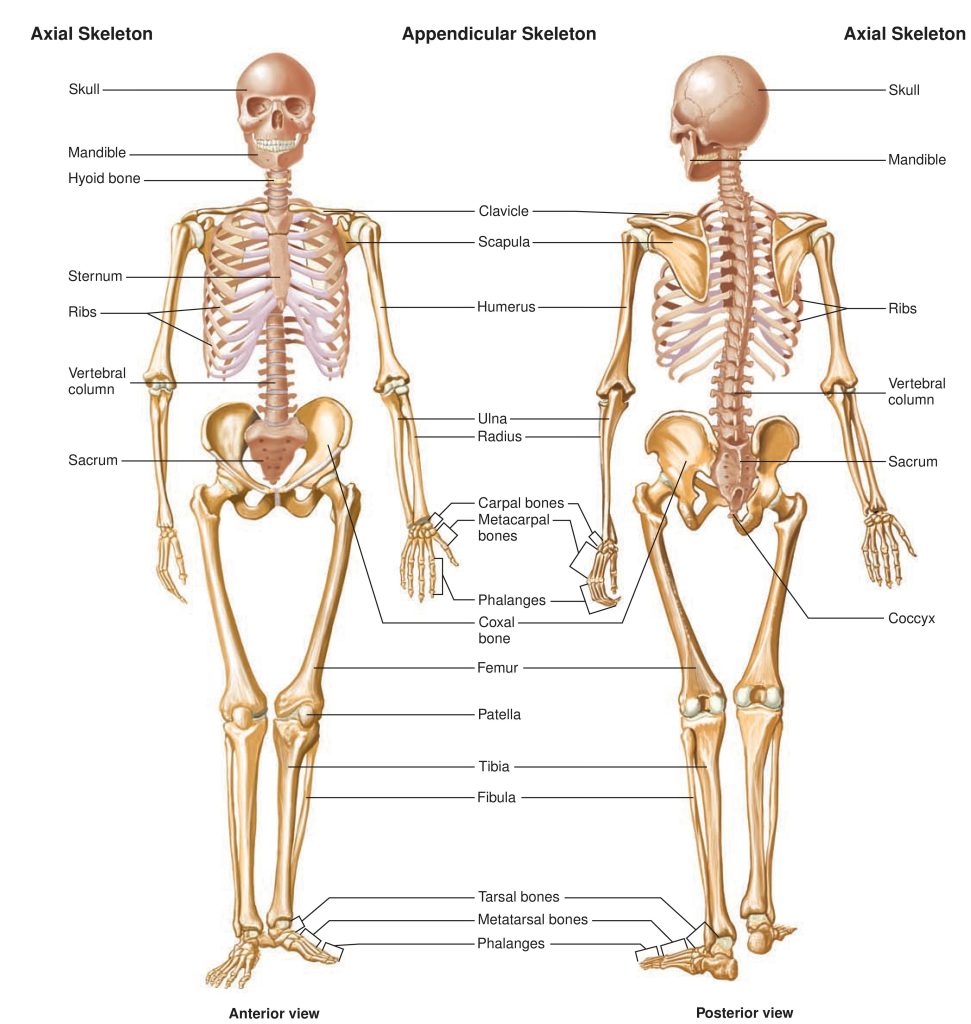
Skeletal system The human skeleton is made up of 206 bones making the human body a multifunctional structure. The skeletal system is composed of Bones, Joints, Cartilage, Tendons, and Ligaments. Human infants are born with about 270 bones, most of which ossifies as they grow up. The skeletons of adult males and females have some variation, primarily to accommodate childbirth. The female pelvis is flatter, more rounded and proportionally larger. Bone: A rigid form of connective tissue that is part of the skeletal system of vertebrates and is composed principally of calcium phosphate and calcium carbonate. It also serves as a storage area for calcium, playing a large role in calcium balance in the blood. The ligament is a small band of dense, white, fibrous elastic tissue. Ligaments connect the ends of bones together in order to form a joint. They also assist in holding organs in place. Tendons are a tough, flexible and inelastic band of fibrous connective tissue that connects muscles to bones and is capable of withstanding tension. Tendons are similar to ligaments; both are made of collagen.
Respiratory System
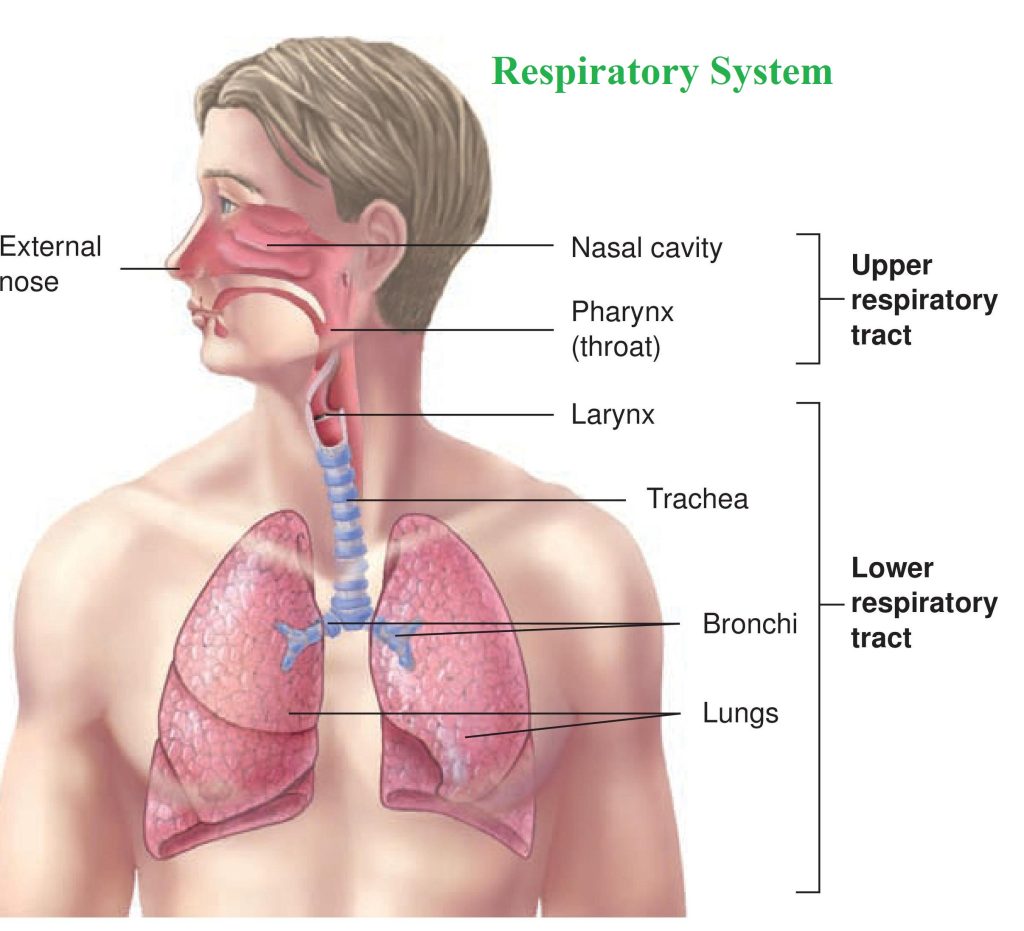
Respiratory system The Human Respiratory System is a series of organs which facilitates the diffusion of oxygen into the bloodstream and distributes throughout the body and receives carbon dioxide from the blood and removes the process of exhalation. The primary organs of the respiratory system are lungs, which carry out this exchange of gases as we breathe. The respiratory system consists of the upper and lower respiratory tracts. The upper respiratory tract composes of Nasal cavity, Pharynx, and Larynx. The lower Respiratory Tract composes of Lungs, Diaphragm, Trachea, Bronchi and Bronchioles. Gaseous Exchange: The main function of the respiratory system is a gaseous exchange. This refers to the process of Oxygen and Carbon Dioxide moving between the lungs and blood. Diffusion occurs when molecules move from an area of high concentration (of that molecule) to an area of low concentration. This occurs during the gaseous exchange as the blood in the capillaries surrounding the alveoli has a lower oxygen concentration of Oxygen than the air in the alveoli which has just been inhaled.
Physiology of Muscle contraction
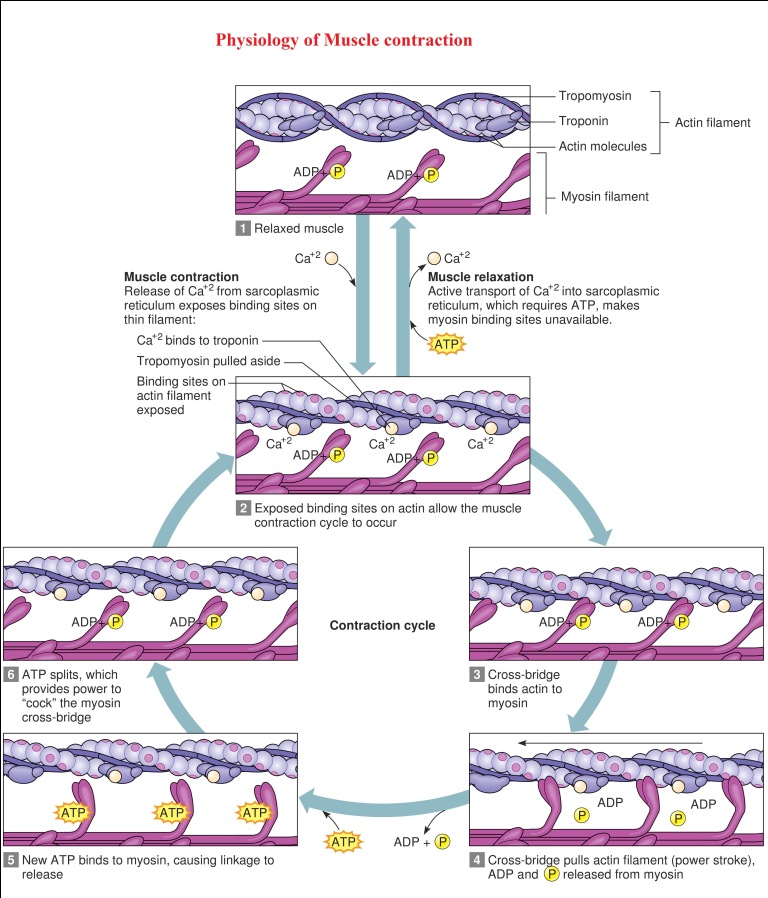
Physiology of Muscle contraction: Muscles contract to produce force, the actin and myosin filaments within the sarcomeres of muscle fibers bind to create cross-bridges and slide past one another, creating a contraction. The events of muscle contraction: During a normal resting state of a muscle, the muscle membrane is in a polarized state, this occurs because: The interior of the muscle cell is negatively charged. It contains a large concentration of potassium ions. The exterior of the muscle cell is positively charged. It contains a large contraction of sodium ions. For a contraction to occur there must first be a stimulation of the muscle in the form of an impulse from a motor neuron. A motor neuron stimulates a number of muscle fibers within a muscle. The Nerve impulse reaches the muscle fibers of a Neuromuscular Junction, it stimulates a reaction in each sarcomere between the actin and myosin filaments. This reaction results in muscular contraction. When the muscle contraction is over, acetylcholine is destroyed by the acetyl cholinesterase. Now, Potassium ions move into the cell and sodium ions get out of the cell. ATP is re-synthesized allowing actin and myosin to maintain their strong binding state. This produces repolarization of the muscle membrane. Now the muscle is ready to contract again.
Disorders of blood pressure
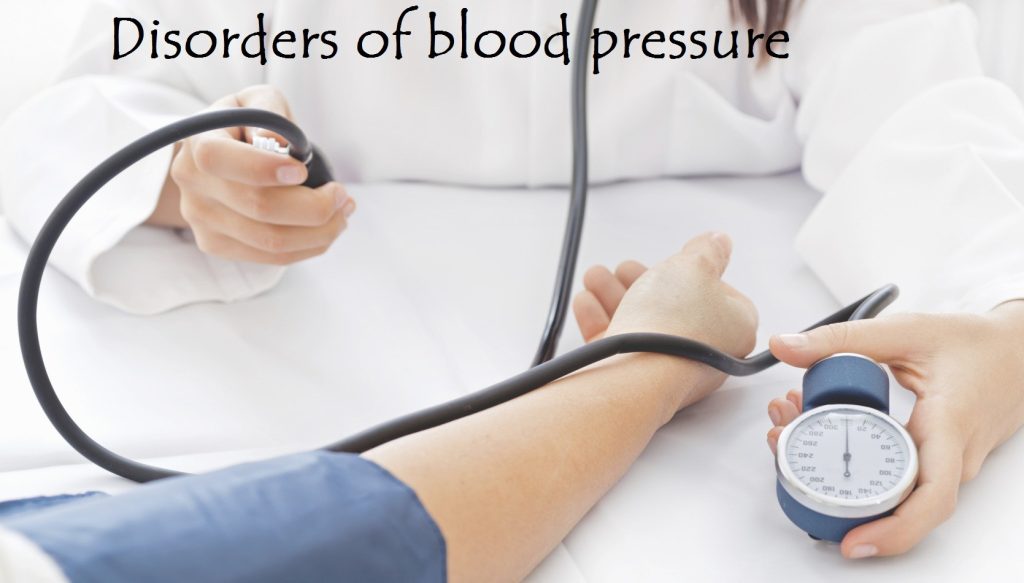
Disorders of blood pressure Hypertension’s Hypertension is a rise in blood pressure above normal. It’s difficult to define the average normal blood pressure. It varies from one age group to other. The blood pressure in an adult may be 120/80. Hypertension has a strong relation with life style regardless of gender and socio-economic status. The systolic blood pressure(BP) greater than or equal to140 mmHg and/or diastolic BP greater than or equal to 90 mmHg is currently the widely accepted diagnostic criteria for hypertension. The management of hypertension is a major public health challenge in developing countries, even though a wide range of antihypertensives are developed and prescribed for the management of hypertension. Hypertension is a major risk factor for stroke, myocardial infarction, vascular diseases and kidney disorders. Hypotension: Hypotension is low blood pressure which can be physiological in health during rest and in elderly. Mostly it occurs as a complication of other diseases e.g. shock, myocardial infarction, and hemorrhage. Blood pressure varies from one person to another. A drop as little as 20 mmHg, can cause problems for some people. Low blood pressure leads to inadequate blood supply to the brain. It may produce brief unconsciousness, fainting. if this is prolonged, death may occur. Severe hypotension can be caused by sudden loss of blood (shock), severe infection, heart attack, or severe allergic reaction.
Neuromuscular junction (Myoneural junction)
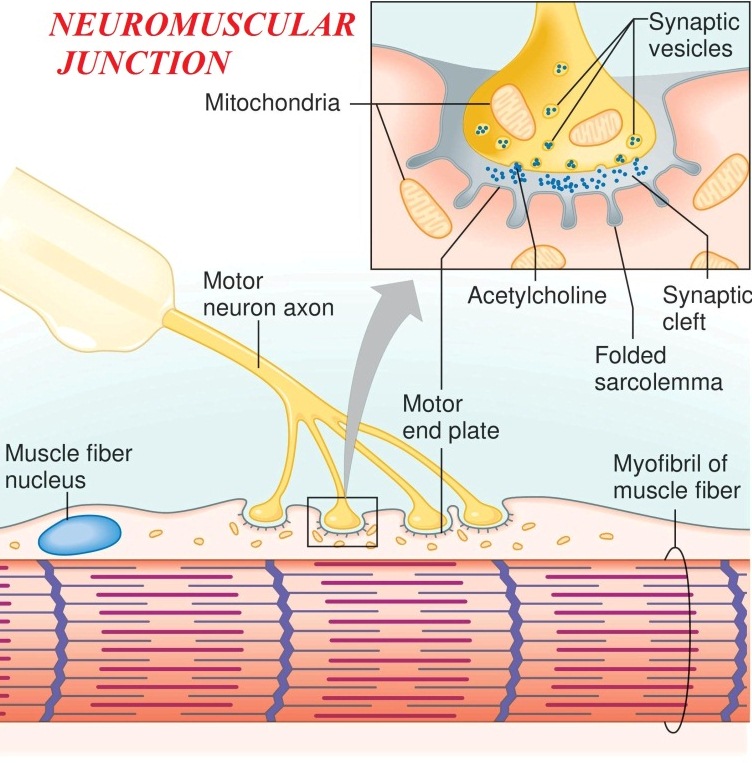
Neuromuscular junction (Myoneural junction) A neuromuscular junction is a synapse between a motor neuron and skeletal muscle. The space between the motor neuron and the skeletal muscle cell is simply referred to as a synapse. Synaptic transmission includes all the events within the synapse leading to excitation of the muscle. At this site, the nerve loses its myelin sheath and gets expanded. Acetylcholine is stored in some vesicles present in this expanded portion. Motor end plate is the part of the muscle facing the expanded nerve terminal. The neuron is sending the transmission and is thus referred to as the pre-synaptic cell, while the muscle is receiving the transmission and is referred to as the post-synaptic cell. Neurotransmitters are molecules stored in the pre-synaptic cell that is secreted into the synapse. Neurotransmitters, in turn, bind to receptors on the postsynaptic cell membrane, and these receptors are specific for that neurotransmitter. The structure motor end plates convoluted and it has enzyme acetyl cholinesterase.