quadriceps muscles
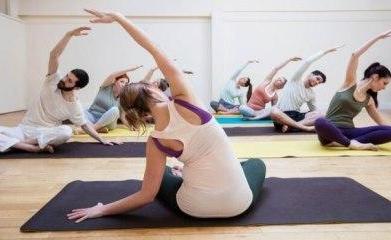
The quadriceps are a group of muscles present on the front of the thigh. They consist of four distinct muscles: the rectus femoris, the vastus lateralis, the vastus intermedius, and the vastus medialis. They are responsible for extending the leg and helping with movements such as walking and jumping.
Traditional and Modern Hatha Yoga Approach
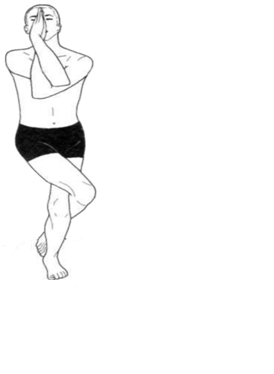
What is Hatha Yoga? The Hatha Yoga Pradipika is compiled by Yogi Swatmarama, an outstanding personality among many authorities of Hatha Yoga i.e. Goraknanath, Gheranda and Srinivasa Bhatta. Meaning of term Hatha Yoga The term Hatha is a combination of two big mantras, i.e. Ha & tha where Ha represents mind, the mental energy. That represents prana the vital force. So Hatha yoga means the union between the pranic and mental force. This is the awakening of higher consciousness. In another description, ‘Ha’ means sun; ‘tha’ means moon “This is a symbolic of the twin energy forces which exists in everything. It represents the forces of mind, prana or vitality. As in yoga, life and consciousness are known as Purusha and Prakriti and in Tantra they are called Shakti and Shiva, similarly in Hatha yoga they are known as Ida and Pingala. Objective of Hatha Yoga The main objective of Hatha Yoga is to create an absolute balance of the interacting activities and processes of the physical body, mind and energy. When this balance is created the impulses created give a call of awakening to the control force (shushmna nadi) which is responsible for the evolution of human consciousness. Therefore it considers Hatha Yoga as the preliminary practice of Raja Yoga or Patanjali’s Ashtanga Yoga. Basic Hatha Yoga Practices Hatha yoga, involving asanas (yoga postures), pranayama (breathing practices), Shat-Karma (internal cleansing techniques), Bandhas (muscular locks and contractions), and Mudras (hand gestures and seals). What is Traditional Hatha Yoga? The Guru-Shishya parampara has been an inevitable part of education in ancient Indian culture. This involved the tradition of a living and learning relationship between the Guru and the Student (Shishya), signifying the emotional, intellectual, and spiritual bonding between them. Traditional Hatha Yoga involves the practice of: Asanas (postures) Pranayama (breathing techniques) Shatkarma (six action/purification methods) Yoga Nidra (psychic sleep meditation) Bandhas (muscular locks and contractions) Mudras (hand gestures and seals). Dhyana (meditation) Trataka (candlelight and gazing meditation) There are many hatha yoga styles which exist in modern day among that, Traditional Hatha Yoga, Satyananda yoga, B.K.S. Iyengar yoga and Ashtanga Yoga considered as traditional Hatha Yoga. Traditional Hatha Yoga Approach In Traditional Hatha Yoga according to the level and intention of the class, the methods of transition will vary to some degree, for example approached from Tadasana and end at tadasana, then enough relaxation space between each practice. Counter pose for every asana involved. Every asana practised one by one individually. What is Contemporary modern Hatha Yoga Approach? Hatha yoga has evolved over the past century to become more inclusive and continues to evolve as new scientific discoveries are made in the fields of kinesiology, psychology, neurology, and holistic health. Whichever style you practice, yoga has the ability to bring balance, physically, mentally, and emotionally, to all areas of your life. In Contemporary Hatha Yoga according to the level and intention of the class, the methods of transition will vary to some degree, for example while in flow-oriented classes such as Vinyasa Flow, most standing asanas are approached from Downward-Facing Dog Pose or directly from another standing asana.
Traditional Hatha Yoga
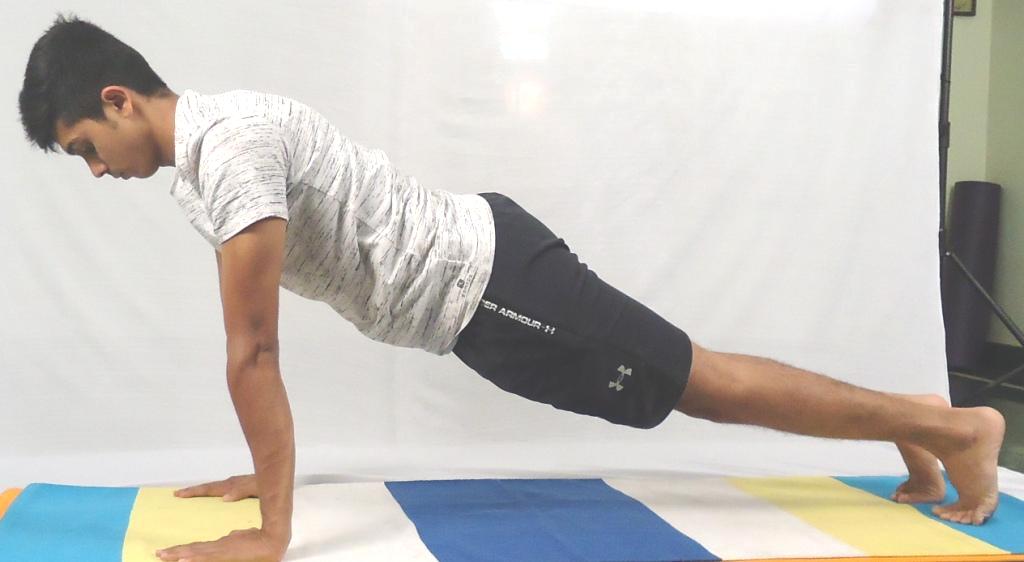
During 800 AD to 1700 AD, the followers of Patanjali Yoga gave greater importance to asanas, kriyas and pranayama for cleansing of the body and mind. This purification helped practitioners reach higher levels of practice like samadhi. This form of yoga is called Hatha Yoga. The Hatha Yoga Pradipika compiled by Yogi Swatmarama serves as a guide for every yoga aspirant. The word Hatha is a combination of two big mantras, Ha and Tha where Ha represents the mind or mental energy and Tha represents prana or the vital force. So Hatha Yoga means the union between the mental and the pranic force leading to the awakening of higher consciousness. It is the six limb yoga with the following principles: asana, pranayama, pratyahara, dharana, dhyana, samadhi. The main objective of Hatha Yoga is purification and harmonization of the body, prana and mind leading to the evolution of human consciousness. Therefore it is considered as the preliminary practice of Tantra, Raja Yoga, Kundalini Yoga and Kriya Yoga. Savasana, Padmasana, Dhanurasana are some of the asanas that serve as examples of ancient traditional Hatha Yoga. In traditional hatha yoga, kriya-asana combination is the first step supported by sattvic diet. Kriya can be Shat kriyas or any purification technique which removes the toxins from the body-mind. Kriya doesn’t necessarily mean only Shat Kriyas (six purification techniques). But every purification technique which removes the toxins from the body-mind. Therefore, you will have mantra chanting, Japa (repetition of a specific mantra), Jala neti, Trataka, Kirtans (inculcating humbleness), traditional meditation techniques for the initiation to Pratyahara, etc as part of the Hatha Yoga practice. This kind of yoga comprises a series of physical poses, called asanas, designed to cleanse the body and mind, as well as strengthen and build muscle, according to Yoga Journal. Performing Hatha yoga on a regular basis can enrich the mind, body, and soul by opening channels of energy in the body, including the spine. Sun salutations Sarvangasana Halasana Setu bandhasana Matsyasana Ardha matsyendrasana Anulom vilom pranayama Savasana
Hatha Yoga
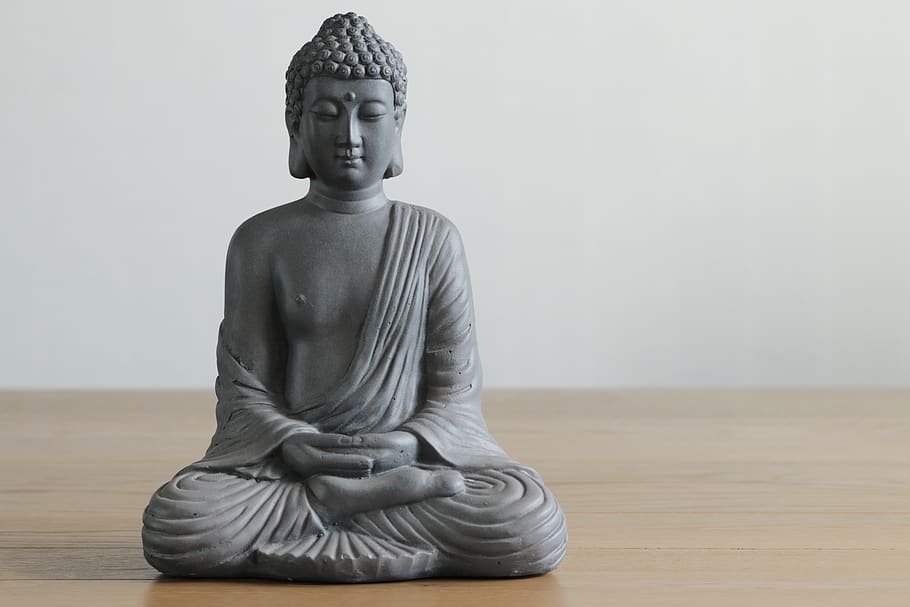
Who is the first hatha yogi In the yogic culture, Shiva is not known as the Adiyogi or the first yogi – the originator of yoga. He was the one who first put this seed into the human mind. Define hatha yoga The letter “Ha” in the term “Hatha” signifies the flow of prana breaths in the solar nadi, and the letter “Tha” signifies the flow of prana breaths in the lunar nadi. When sun and moon become one during pranayam, breath simultaneously passes through both nostrils. The pranayama sadhana is termed as Hatha yoga sadhana. Though balancing Ida and Pingala is common practice in hatha yoga, scholars of Sanskrit agree that the correct meaning of hatha is force or forceful. Hatha yoga is practiced at a slower pace, with focus on the breath, controlled movements, and stretching. Aim of hatha yoga The purpose of Hatha Yoga is relief from physical, environmental, and spiritual pain, and through the practices giving in the Hatha Yoga Pradipika, we can prepare the body for the Raja Yoga.
Concept of asana according to swami Swatmarama and Patanjali.
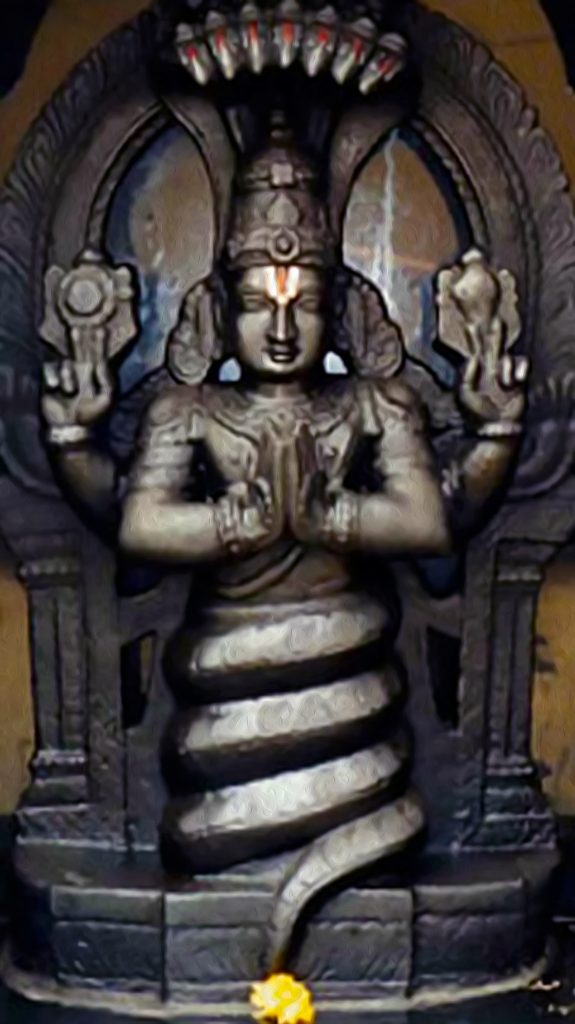
Concept of asana according to swami Swatmarama and Patanjali. Swatmarama talks about Asana as the fundamental or primary education of Yoga. Asana is believed to help with the attainment of steadiness and calmness of the mind and the body, ridding the body of mental and physical diseases and experiencing the lightness in the limbs. Asanas create the pathway for the pranic center and open the energy channels. The practice of asanas leads to higher awareness and becoming more statute in regulating the body, breath, and mind. Patanjali also talks about Asanas as a medium of facing mentally steady, calm, tranquil, and quiet. He emphasizes the notion of “ sthira- sukha- Asanam”, finding calmness, comfortableness, and steadiness in the practice of asanas. Making an effortless effort and facing content in the posture. The aim is to prepare one to be at be to comfortably hold an asana for a long period of time to be able to ultimately practice meditation.
Hatha yoga sequence(60 min)
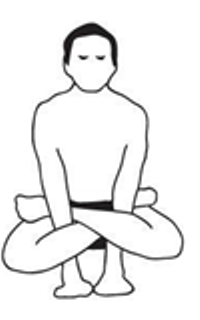
60 min hatha yoga sequence for both gender for the age group of 25 to 40, who does not have any physical or mental illness. – Centering the class. – Chanting of Om mantra – Pranayama: Kapalbhati and Bhrastika Warm-up: Cat-cow, Bal asana stretches, Vajrasana/ Bhaddha Konnsa asana stretches, Standing stretches. – 2 rounds of Shivananda Surya Namaskara, 2 rounds of Ashtanga A, and 1 round of Ashtanga B. – Standing relaxation 1-2 minutes. Standing Asanas: Trikonna Asana, Parivritt Trikonna Asana , Parsvottanasana, Utkatasana, Utkata Konasana, and Prasarita Padottanasana. – Sitting hoses: Vajrasna, Janu Sirsasana, Parivritta Janu Sirsasana, Vakrasana, Paschimottanasana, Badhakona asana, and Upavitha Konsa asana – supine poses: Beth Bandha, Chakrasana, supta Pawanmuktasana – Ananda Balasana, jathara Parivartasana – Savasana – om Santhi Santhi santhihi
Hatha Yoga
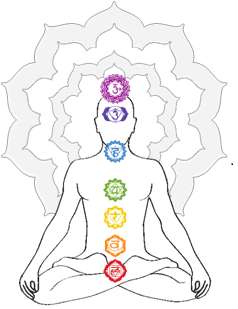
The larger part of yoga being rehearsed in the globe is hatha yoga, including asanas (yoga stances), pranayama (breathing practices), kriyas (inside purging strategies), bandhas (strong locks and contractions), and mudras (hand gestures and seals), to more prominent or lesser degrees relying upon the arrangement of yoga. The 200-hour Hatha Yoga practice by Karuna Yoga Maha Vidya Peetham, teacher training center in, Bangalore, India is one of the best institutions today to learn Hatha Yoga. Yoga Anatomy of Hatha Yoga Despite the fact that a physical practice, hatha yoga is more than a workout schedule. Hatha yoga is an exceptionally refined arrangement of all-encompassing wellbeing and prosperity, tending to all layers of the self, which are not isolated but rather interrelated, influencing each other. On the off chance that the body is debilitated, the psyche, heart, and soul are altogether decreased, and the other way around; if the heart is discouraged, the brain, soul, and body are lazy; etcetera. Considered a science with refined procedures and practices, hatha yoga viably balances and fortifies each arrangement of the body — the musculoskeletal, respiratory, circulatory, stomach related, anxious, and endocrine frameworks — permitting professionals to discharge pressure, increment dissemination, dispense with poisons, and reestablish common wellbeing and essentials. Meaning of Hatha Yoga In spite of the fact that the Sanskrit expression hatha signifies “mighty” or “extreme,” when broken into its syllables, ha for “sun” and that for “the moon,” it infers a joining of contrary energies. Manly qualities, for example, quality, animation, animosity, hardness, and warmth are related with the sun, and feminine qualities, for example, delicate quality, lack of involvement, tenderness, nurturance, and cool-ness are related with the moon. The yoga of the sun and moon, hatha yoga, looks to adjust the restricting strengths: manly and female, hard and delicate, right and left, inward and external, doing and being, yin and yang. Physically hatha yoga requires adjusted activity. Through the practice, we build up a harmony amongst quality and adaptability while figuring out how to explore the unobtrusive move amongst exertion and surrender. The flawless thing is that a few stances, for example, forward folds, cool the body and quiet the sensory system, while others, for example, backbends, warm and empower the body. At that point, there are turns, which are alluded to as either “shrewd” represents that will cool or warmth the body, whichever is important to take the body back to impartial. Spine & Hatha Yoga The asanas collectively work to reestablish and keep up an adaptable and conditioned spine. For creatures, it is vital to move the spine in all directions with a specific end goal to keep the spinal segment supple and portable. They move, extend, twist, and twist their spines in each course.) The spinal segment is comprised of various vertebrae and supple, sinewy circles that fill in as spacers in the middle. It houses the spinal string, which associates with the cerebrum and, together with it, creates the focal sensory system. Nerves then branch out from the spinal string through the spaces between the vertebrae, associating particular body parts — organs, organs, et cetera — to the mind. After some time, with gravity, the spine starts to pack, losing space between the vertebrae and bargaining the vertebral circles. The outcome is regularly an encroached nerve, removing the stream of vitality and nerve driving forces through the body, bringing on debilitated organs and loss of muscle capacity, also torment. In this way, the significance of a supple yet conditioned spine can’t be focused on enough. The wide range of yoga postures flex, contort, bend, protract, and open the distinctive districts of the spine, keeping up the wellbeing of the whole spinal segment and reinforcing the sensory system. Prana & Hatha Yoga On the subtle, or active, level, the full yogic breath brings more prana into the body while likewise managing the life-constrain vitality. Prana is the body’s unobtrusive vitality. It is the enlivening power behind every atom, cell, organ, and arrangement of the body, organizing each real movement from the pumping of the heart to the disposal of waste. Prana likewise enormously impacts the mind’s state. Unsteady pranic vitality causes the brain to wind up distinctly upset and the body’s different frameworks to be unpredictable, producing disease in the psyche and body. The breath is an augmentation of prana. The more profound you inhale with cognizant mindfulness, the more prana you get. By being a part of Karuna Yoga Maha Vidya Peetham, Yoga TTC program Bangalore, you can even direct the stream of prana into particular regions of the body just by sending the breath there. Moreover, when inward breaths and exhalations are balanced, prana gets to be distinctly steadier and the mind calmer, and all the body’s living frameworks work all the more ideally. Join Karuna Yoga Maha Vidya Peetham, Yoga TTC program for a better understanding of Hatha Yoga. Hatha yoga has evolved over the previous century to wind up distinctly more inclusive and keeps on advancing as new logical revelations are made in the fields of kinesiology, brain science, neurology, and comprehensive wellbeing. Whichever style you follow, yoga can bring balance physically, rationally, and inwardly, to all parts of your life. It is the rare 90 minutes when students don’t need to consider their occupations and other world affairs. However your own, so give yourself the authorization to remain totally exhibit for the length of the class, leave every bit of your stresses and duties with your shoes at the entryway, and be with yourself in your body on your mat.
Food Prohibited for Hatha Yogic Practitioners
Hatha Yoga Pradipika – Food Prohibited for Hatha Yogic Practices Katvamla-tikshna-lavanoshna-haritasaka / Sauvira-taila-tila-sarshapa-madya-matsyan // Ajadi-mamsa-dadhi-takra-kulattha-kola / Pinyaka-hingghu-lasunady-amapathyam-ahuh//(Chapter -1, Verse- 59). The foods which prohibited for the Hatha Yogic practitioners are: those which are bitter, sour, pungent, salty, heating, green vegetables, sour gruel, oil, sesame and mustard, alcohol, fish, flesh foods, curds, buttermilk, horse gram, fruit of jujube, oil cakes, asafetida and garlic. (Chapter -1, Verse- 59). Bhojanam ahitam vidyāt punarasyoshnīkrtam rūksham/ Atilavanamam layuktam kadaśanaśākotkam varjyam// (Chapter -1, Verse -60). Unnourishing food should not be consumed, that which is reheated after becoming cold, which is dry (devoid of natural oil), which is excessively salty or acidic, stale or has too many mixed vegetables. (Chapter -1, Verse -60).
Nishpatti Avastha (state of consummation)
Nishpatti Avastha (state of consummation) Nishpatti avastha or state of consummation – Rudra granthi is pierced, the fire of prana flows to the place of Ishwara. Then in the state of nishpatti or consummation is the tinkling sound of the flute resonating like a vina Rudraghranthim yada bhittva sarvapithaghatoanilah/ Nishpattau vainavah sabdah kvanadvinakvano bhavet// If the Rudra granthi is pierced, the fire of prana flows to the place of Ishwara. Then in the state of nishpatti or consummation is the tinkling sound of the flute resonating like a vina.(Chapter -4, Verse 76).
Nada anusandhana – exploration of sound “OM”
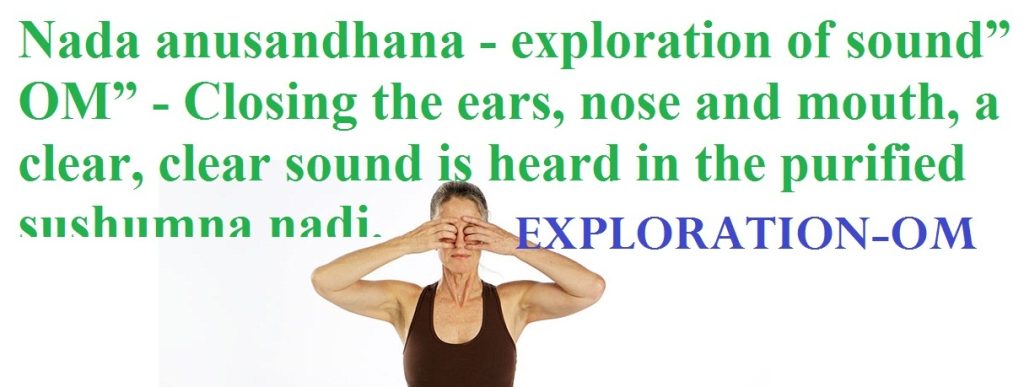
Nada anusandhana – exploration of sound “OM” Nada anusandhana – exploration of sound”OM” – Closing the ears, nose and mouth, a clear, clear sound is heard in the purified sushumna nadi. Muktasane sthito yogi mudram sandhaya sambhavim/ Śrnuyad dakshine karne nadam antastham ekadhih// The Hatha Yogi, sitting in Muktasana, concentrated in shambhavi mudra, should hear closely to the nada heard within the right ear. (Chapter -4, Verse 67). Sravanaputanayanayughala Ghranamukhanam nirodhanam karyam /Suddhasushumnasaranau Sphutamamalah sruyate nadah// Closing the ears, nose and mouth, a clear sound is heard in the cleansed sushumna nadi. (Chapter -4, Verse 68).